

How to Write a Winning Resume for Remote Jobs
Remote work isn’t just a passing trend anymore—it’s now a competitive global marketplace. With companies hiring talent from anywhere, the number of applicants for each role has skyrocketed. That means your resume is no longer just a summary of work history; it’s your first (and sometimes only) chance to prove you’re remote-ready.
Unlike traditional office positions, hiring managers for remote roles look for specific qualities: self-discipline, adaptability, digital communication, and technical proficiency with collaboration tools. A resume that doesn’t highlight these traits risks getting buried under dozens of others. That’s why learning how to craft a winning resume for remote jobs is essential if you want to stand out.
Think about it—recruiters might only glance at your resume for six to eight seconds before making a decision. In that tiny window, they’re scanning for remote-friendly skills, past telecommuting experience, and whether your background aligns with a distributed team environment. If your resume doesn’t immediately communicate those things, you’re likely to be overlooked.
The good news? With the right structure, language, and examples, your resume can rise above the rest. In this guide, you’ll discover exactly how to write, format, and optimize your resume to catch the attention of recruiters and beat applicant tracking systems (ATS). Whether you’re applying to your first remote role or leveling up your digital career, the strategies below will help you create a resume that opens doors.
What Makes a Winning Resume for Remote Jobs?

Disclosure: This post may contain affiliate links, meaning if you decide to make a purchase via my links, I may earn a commission at no additional cost to you.
A winning resume for remote jobs goes beyond listing your past roles—it proves that you can thrive in a digital, independent, and highly collaborative environment. Unlike traditional positions where recruiters can assess you face-to-face, remote hiring decisions are often based almost entirely on what’s written in your application. That makes your resume the ultimate filter between you and your next opportunity.
So, what sets a strong remote resume apart?
First, it emphasizes remote-friendly skills. Employers want to see evidence of self-management, time tracking, clear written communication, and comfort with digital tools like Zoom, Slack, or Trello. These details reassure them that you can stay productive without direct supervision.
Second, it highlights measurable achievements instead of vague responsibilities. For example:
- Weak: “Managed projects for marketing campaigns.”
- Strong: “Led 3 remote campaigns using Asana, delivering results 20% faster than projected timelines.”
Third, it adapts to ATS optimization. Many companies rely on Applicant Tracking Systems to scan resumes for keywords related to the job description. A winning resume mirrors the language of the posting, ensuring critical terms like “virtual collaboration,” “distributed teams,” or “remote project management” are included naturally.
Finally, a great resume conveys your professional personality. Employers hiring remotely want people who are not just skilled but also reliable team members. A professional summary that showcases adaptability, proactive problem-solving, and accountability can make a lasting first impression.
In short, a winning resume is structured, keyword-optimized, and filled with proof that you can succeed outside of a traditional office. It’s not about reinventing the wheel—it’s about reshaping your story to fit the remote-first world.
Understanding Recruiter Expectations for Remote Roles
When recruiters screen candidates for remote positions, they aren’t just checking qualifications—they’re asking a bigger question: Can this person succeed without being in the office? That’s why their expectations go beyond standard job requirements.
First, recruiters want to see independence and accountability. Since managers can’t walk by your desk to check progress, they rely on your ability to manage deadlines, prioritize tasks, and deliver consistent results. Highlighting experiences where you worked autonomously shows you’re ready for this challenge.
Second, communication skills are a top priority. In distributed teams, most interactions happen through email, chat platforms, or video calls. Recruiters look for candidates who can write clearly, express ideas concisely, and collaborate effectively in virtual settings. Including remote collaboration tools you’ve mastered—like Slack, Microsoft Teams, or Zoom—helps demonstrate this.
Third, expect recruiters to scan your resume with Applicant Tracking Systems (ATS). These systems filter out candidates who don’t use job-specific keywords. If a job description emphasizes “remote project management” or “virtual team leadership,” those phrases should appear naturally in your resume.
Finally, recruiters value adaptability and reliability. Remote roles often come with changing priorities and cross-time-zone teamwork. Employers want to feel confident that you can adjust quickly and remain dependable, no matter the environment.
By aligning your resume with these expectations, you position yourself as more than just qualified—you become the safe, trustworthy choice for a remote hire.
Step-by-Step Guide: How to Write a Winning Resume for Remote Jobs
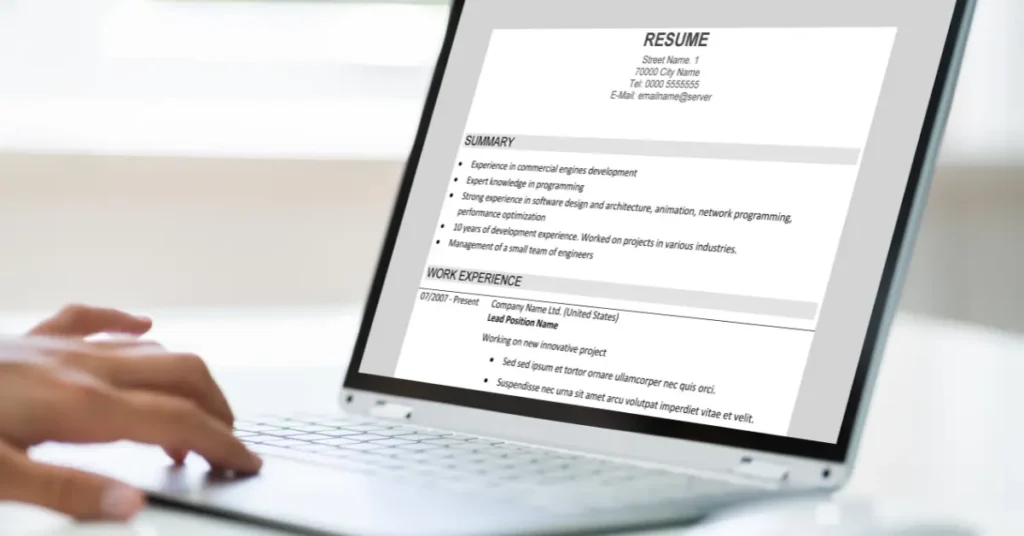
Creating a winning resume for remote jobs isn’t about reinventing your professional story—it’s about reshaping it so recruiters immediately see that you’re ready to succeed in a digital-first environment. Below, you’ll find a detailed, step-by-step process to craft a resume that beats Applicant Tracking Systems (ATS), catches recruiter attention, and highlights your ability to thrive remotely.
4.1 Start with the Right Resume Format
The first step is choosing a format that aligns with both recruiter preferences and ATS requirements. Not all formats are created equal, and the wrong one could cost you opportunities.
Best formats for remote resumes:
- Reverse-chronological resume – Lists your most recent role first. Ideal for candidates with consistent career growth and solid work history.
- Functional resume – Focuses on skills rather than work history. Useful if you’re transitioning careers or have gaps in employment.
- Hybrid (combination) resume – Blends skills and work history. This format works well for remote roles because it showcases remote-friendly skills alongside relevant achievements.
Pro tip: Stick with reverse-chronological or hybrid for ATS-friendliness. Functional resumes may confuse automated systems.
LSI keywords: resume template for remote work, hybrid resume format, ATS optimization.
4.2 Craft a Strong Professional Summary
Your professional summary is your elevator pitch—it’s the first thing recruiters read. In just 2–3 sentences, you need to prove you’re remote-ready.
What to include in a remote-focused summary:
- Years of experience relevant to the role.
- Evidence of remote or hybrid work history.
- Remote-friendly traits: adaptability, proactive communication, self-management.
Example (Weak):
“Marketing professional with 7 years of experience in digital campaigns.”
Example (Strong):
“Remote marketing strategist with 7+ years of experience leading distributed teams across three continents. Skilled in managing multi-channel campaigns through Asana and Slack, consistently exceeding engagement goals by 20%.”
This small shift instantly positions you as someone who understands remote workflows.
LSI keywords: resume headline for virtual roles, professional summary for remote work.
4.3 Highlight Remote-Friendly Skills
Skills are the backbone of a winning resume for remote jobs. Employers need to see proof that you can work effectively without constant supervision.
Top remote-friendly skills to showcase:
- Digital communication: Writing clear emails, active participation in chat platforms, managing video calls.
- Time management: Meeting deadlines, balancing multiple projects, using productivity tools.
- Project management: Familiarity with Agile, Kanban, or Scrum frameworks.
- Adaptability: Ability to switch priorities or adjust to different time zones.
- Tech proficiency: Using collaboration platforms and cloud-based tools.
Tools worth listing: Slack, Zoom, Trello, Asana, ClickUp, Microsoft Teams, Google Workspace, Notion.
Instead of listing generic skills like “team player,” show how you applied these skills in remote contexts.
LSI keywords: digital project management, remote collaboration tools, asynchronous communication.
4.4 Showcase Remote Work Experience Effectively
When describing past roles, don’t just list responsibilities—show measurable achievements in a remote context.
Example of poor bullet points:
- Managed projects for multiple clients.
- Attended weekly meetings with the team.
Example of strong bullet points:
- Managed 12 client projects entirely remotely using Trello and Google Workspace, achieving 98% on-time delivery.
- Coordinated weekly Zoom meetings with a cross-time-zone team, improving project clarity and reducing delays by 15%.
Even if your previous role wasn’t officially remote, you can still highlight remote-related aspects (such as hybrid tasks, freelance projects, or digital collaboration).
Recruiters are not just looking for what you did—they want proof you can replicate it in a remote environment.
LSI keywords: telecommuting experience, freelance projects, distributed teams.
4.5 Tailor Your Resume to the Job Posting
One of the biggest mistakes job seekers make is sending the same resume everywhere. Remote recruiters often use ATS to scan resumes for job-specific keywords. If your resume doesn’t match, it may never be seen by a human.
Steps to tailor your resume:
- Copy the job description into a keyword analyzer (free online tools can help).
- Identify the top keywords (e.g., “remote customer service,” “CRM software,” “virtual onboarding”).
- Naturally weave these terms into your resume summary, skills, and work history.
Tailoring doesn’t mean stuffing keywords. It means aligning your language with the employer’s priorities.
LSI keywords: job-specific resume, resume customization, ATS keyword matching.
4.6 Emphasize Communication & Independence
Remote employers worry about one thing: Will this person need handholding? To prove you’re a safe bet, emphasize communication and independence.
Ways to do this:
- Highlight solo projects you managed.
- Mention leadership in virtual environments.
- Use phrases like “self-starter,” “proactively solved problems,” “managed workflows independently.”
Example:
“Independently organized a remote product launch across three international markets, coordinating teams via Slack and delivering 15% above revenue targets.”
This builds trust with recruiters who can’t physically supervise you.
LSI keywords: self-motivation, proactive problem-solving, independent workflow.
4.7 Add a “Remote Work Tools & Technology” Section
A small but powerful way to stand out is by adding a dedicated tools section. It tells recruiters you’re tech-savvy and ready to integrate into their systems.
Example Tools Section:
Remote Work Tools: Slack, Microsoft Teams, Zoom, Asana, ClickUp, Trello, Google Workspace, Notion, Basecamp.
This also boosts ATS keyword recognition. Keep it short and scannable.
LSI keywords: virtual collaboration software, productivity tools, cloud platforms.
4.8 Proofread and Keep It Error-Free
Remote recruiters often receive hundreds of applications. Typos or sloppy formatting signal carelessness—something remote teams can’t afford.
Checklist for proofreading:
- Read your resume aloud to catch awkward phrasing.
- Use tools like Grammarly to check grammar.
- Ask a peer to review for clarity.
Remember: small errors can make big differences in perception.
4.9 Use a Clean, Professional Design
Finally, presentation matters. Remote recruiters don’t need fancy graphics—they need clarity.
Design tips:
- Stick to clean fonts (Arial, Calibri, Helvetica).
- Use clear headings and plenty of white space.
- Avoid overloading with colors or images (they confuse ATS).
- Save as PDF unless the job description says otherwise.
Your design should reflect professionalism and readability, not a creative portfolio (unless applying for design roles).
Wrapping Up the Step-by-Step Guide
By now, you know that a winning resume for remote jobs is:
- Formatted for ATS and recruiters.
- Tailored to the job description.
- Focused on remote-friendly skills, tools, and achievements.
- Proofread and designed with clarity.
If you follow these steps, your resume won’t just pass the digital filters—it’ll prove to recruiters that you’re built for remote success.
Common Mistakes to Avoid in Remote Job Resumes
Even the most qualified candidates miss out on opportunities because of avoidable resume mistakes. When applying for remote roles, these errors become even more costly, since competition is global. To make sure your application stands out, watch out for these common pitfalls:
1. Using a generic resume for every application
Sending the same version everywhere is one of the fastest ways to get filtered out by ATS. Remote employers expect resumes tailored with the right keywords and skills from the job description.
2. Forgetting to highlight remote-specific skills
Recruiters want evidence of your ability to work independently and communicate digitally. If you don’t showcase remote-friendly skills—like time management, collaboration via Zoom or Slack, or experience across time zones—you’ll blend into the crowd.
3. Overloading with irrelevant job history
Listing every job you’ve ever had clutters your resume. Focus instead on roles that demonstrate adaptability, digital skills, and measurable achievements.
4. Ignoring ATS formatting rules
Fancy graphics, unusual fonts, and images might look nice but often confuse applicant tracking systems. Stick to clean formatting so your resume actually gets seen.
5. Leaving out results and metrics
Recruiters don’t just want to know what you did—they want to see impact. Phrases like “increased client retention by 25% through virtual support” carry more weight than vague descriptions.
Avoiding these mistakes ensures your resume communicates one clear message: you’re not just qualified—you’re ready to succeed in a remote role.
Winning Resume Examples for Remote Jobs
Sometimes the best way to understand what works is by seeing it in action. A winning resume for remote jobs doesn’t just list responsibilities—it demonstrates adaptability, communication, and measurable results in a remote setting. Here are a few practical examples you can model.
Professional Summary (Weak vs. Strong)
- Weak: “Customer support professional with experience answering client inquiries.”
- Strong: “Remote customer support specialist with 5+ years handling 50+ inquiries daily across email, chat, and Zoom. Skilled in Zendesk and Slack, maintaining a 95% satisfaction rate while working independently.”
Work Experience (Weak vs. Strong)
- Weak: “Managed marketing campaigns for different clients.”
- Strong: “Led fully remote marketing campaigns for 10+ clients using Asana and Trello. Increased ROI by 22% through data-driven strategies and cross-time-zone collaboration.”
Skills Section Example:
- Remote Collaboration Tools: Slack, Zoom, Microsoft Teams, Trello, Google Workspace
- Project Management: Agile, Kanban, Asana, ClickUp
- Soft Skills: Proactive communication, adaptability, time management
Read More: Soft Skills vs Hard Skills: What Employers Want
Why These Work:
Each example highlights specific tools, measurable results, and remote-friendly skills. Recruiters immediately see evidence that you can thrive in distributed teams without supervision.
For more inspiration, check out our related guide on cover letter tips for remote job applications, which pairs perfectly with a strong resume.
Final Checklist Before Submitting Your Resume
Before hitting “send,” take a few minutes to run your resume through this quick checklist. These small details can be the difference between landing an interview and getting lost in the pile.
✅ Is your resume ATS-friendly?
- Use a clean, professional format (no graphics or tables that confuse scanners).
- Save as PDF unless the employer specifies another format.
✅ Did you tailor it to the job description?
- Mirror keywords from the posting naturally.
- Emphasize the skills and tools the employer values most.
✅ Does it highlight remote-readiness?
- Showcase independence, communication, and adaptability.
- Include a dedicated section for remote tools and platforms.
✅ Are your achievements measurable?
- Replace vague tasks with results-driven bullet points.
- Use metrics like percentages, revenue growth, or time saved.
✅ Have you proofread carefully?
- Eliminate typos, grammar mistakes, and inconsistent formatting.
- Ask a friend or colleague to review for clarity.
Taking the time to check each of these points ensures your winning resume for remote jobs communicates professionalism, reliability, and the ability to thrive in a distributed team. Remember: the goal is not just to be noticed, but to inspire confidence that you’re the right fit.
Crafting Your Winning Resume for Remote Jobs

In today’s global job market, standing out isn’t just about having the right experience—it’s about proving you can excel in a digital-first environment. A winning resume for remote jobs communicates much more than your career history; it tells employers that you’re adaptable, tech-savvy, and capable of thriving without constant supervision.
By focusing on the right format, tailoring your resume to each job posting, and emphasizing remote-friendly skills and tools, you create a document that works for both ATS filters and human recruiters. Add measurable achievements, avoid common mistakes, and keep your design clean and professional—you’ll instantly set yourself apart from the crowd.
Remote work opportunities are growing, but so is the competition. Your resume is often the first impression you make, so treat it as your strongest marketing tool. Take the time to refine it, and you’ll increase your chances of landing interviews and securing the flexibility and freedom that remote jobs provide.
If you’re ready to take the next step, consider pairing your resume with a tailored cover letter that reinforces your remote-readiness. Together, they’ll make a powerful case for why you’re the candidate employers have been searching for.
FAQ
What is the best resume format for remote jobs?
A reverse-chronological or hybrid format is ideal. These formats are ATS-friendly and highlight both your work history and remote-specific skills.
How do I prove remote experience if I’ve only worked in traditional roles?
Emphasize hybrid tasks, freelance projects, or digital collaboration. Highlight times you used tools like Slack, Zoom, or Trello to work with distributed teams.
Do I need to customize my resume for each remote job posting?
Yes. Tailoring your resume with the employer’s keywords and focus areas increases your chances of passing ATS filters and impressing recruiters.
You don’t need to enroll in a 4-year program. Try:
- Coursera (certified programs from top universities)
- LinkedIn Learning
Many of these platforms offer certificates, practice projects, and eve

I’m Olivia Blake, the voice behind Job Boost 4U. I help people like you land better jobs and earn online with practical, honest tips.
Read more…


